
Key considerations for those investing with environmental impact in mind.
If you’ve ever felt tension between your investment holdings and your personal values, you’re not alone. Fortunately, doing good doesn’t have to mean sacrificing returns.
Most high-net-worth individuals still approach investing from a strictly performance-based perspective. They’re not necessarily looking for portfolios that mirror their values—but that doesn’t mean they don’t care about expressing them. Often, those expressions come through philanthropic foundations or donor-advised funds (DAFs).
As a senior portfolio manager with the investment team at Whittier Trust, I often help clients align their financial capital with environmental or sustainability concerns in two primary ways. First, we design custom portfolios that reflect a client’s priorities, covering everything from carbon intensity to labor practices. While many funds are available, we take selection to the individual security level. With funds you are along for the ride, whereas with individual stock selection, you are in control.
Second, we look for companies that exhibit strong operational integrity for all the investments we manage, not just because it aligns with values, but because it’s good business. Companies that think long-term about sustainability tend to manage better, allocate better, and ultimately perform better. Take Nvidia, whose new Blackwell chips are far more efficient in both energy and water use. That makes them more competitive for two reasons. Yes, customers like Amazon and Google care about the cost of the water and energy but more importantly, they care about sustainability. Nvidia benefits because they’re delivering a product that meets both criteria: performance and values.
Earnings from Embracing Innovation

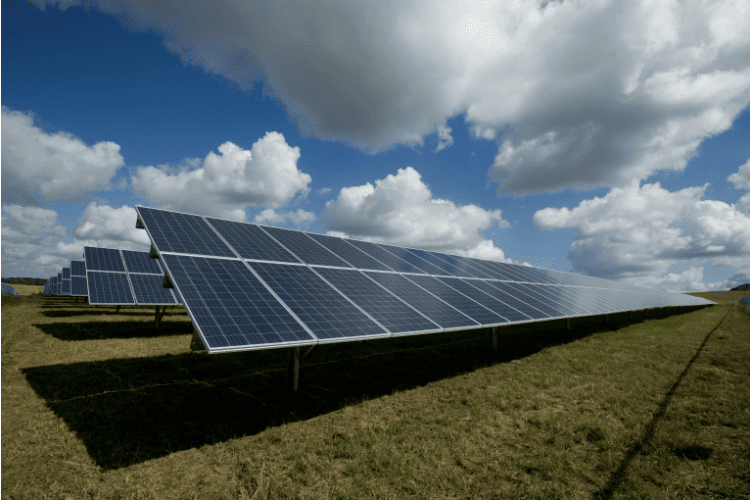
One of the more interesting success stories in energy and infrastructure is Eaton Corporation, a power management company that began electrifying its factories decades ago. That head start has become a growth engine today as industrial customers seek reliable, clean energy solutions. Their projects with solar-plus-storage microgrids are helping clients reduce energy costs by 20% or more, with typical paybacks in the three to six year range.
United Rentals is doing something similar, not by selling energy but by helping clients use less of it. In Costa Rica, they built a grid solution that saves smaller firms close to $1 million annually by reducing diesel dependence and improving reliability. In the U.S., they’ve replaced 24/7 generator setups with hybrid battery systems and smarter power distribution, delivering immediate ROI to clients while reducing emissions.
Planning for Future Profits
Of course, many of these projects are long-term. Investors need to understand that companies making these bets may deviate from short-term benchmarks, especially if they’re taking a capital-heavy route. We also see challenges when clients want to divest from entire sectors (“I don’t want to own any pharma stocks,” for example). We help them analyze what that sector has contributed to performance historically, and what the trade-offs may be moving forward.
For clients who want to exit quickly but still make a positive impact, there are creative solutions. One option is to donate the shares to a DAF or charity, securing a tax write-off and avoiding capital gains. Another is a charitable remainder trust, which allows them to receive income from the assets during their lifetime while making structured gifts to charities and getting upfront tax benefits.
For people who want to align their personal values with their portfolio values, my advice is always move thoughtfully and give your wealth management team time to do the research. Strong investing is about pairing performance with principles.
Multiple studies have shown the financial value of sustainable initiatives including McKinsey’s “The Triple Play: Growth, Profit, and Sustainability” (2023). The companies that will still be thriving 50 years from now are taking a strategic, business-first approach to environmental adaptation. These investments in energy efficiency, water stewardship, and climate resilience are becoming high quality profit centers.
Written by Craig T. Ayers, Senior Portfolio Manager and Senior Vice President in Whittier Trust’s San Francisco office. Craig specializes in working with high-net-worth individuals, families, and their philanthropic foundations to create customized investment portfolios.
If you’re ready to explore how Whittier Trust’s investment services can work for you, start a conversation with a Whittier Trust advisor today by visiting our contact page.