With local expertise and institutional experience, Steven Ward advances Whittier Trust’s real estate offerings in and around Orange County.
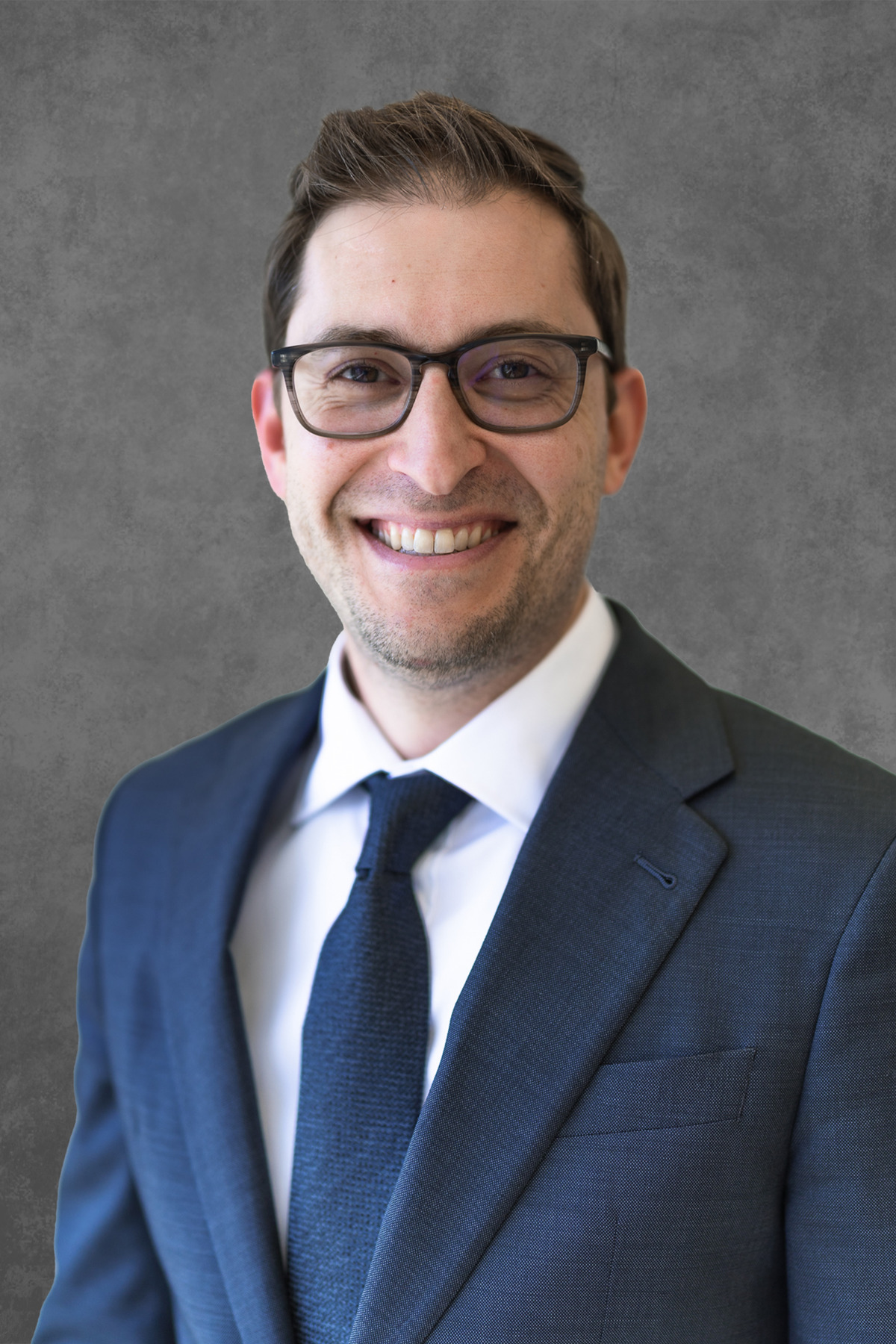
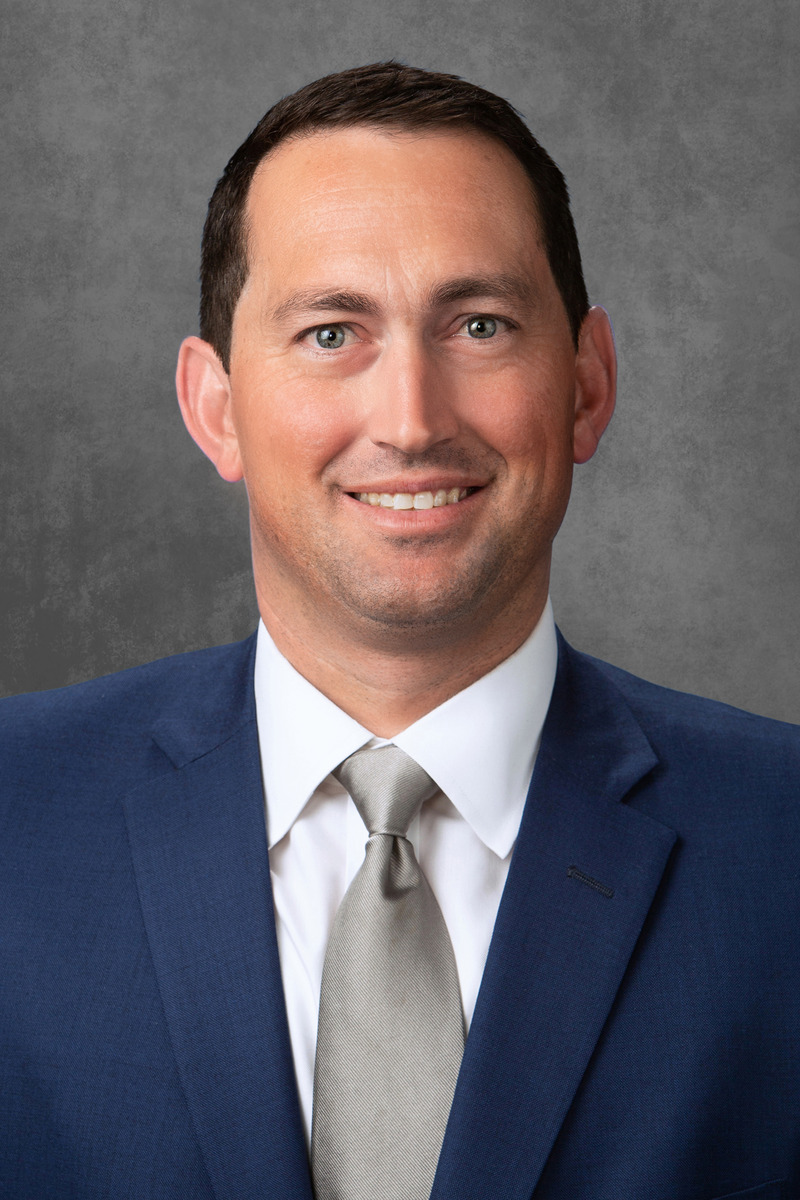
Whittier Trust is proud to welcome Steven Ward as Vice President of Real Estate, based in the firm’s Newport Beach office. Steven joins Whittier Trust with an extensive background in real estate investment and a track record of helping clients navigate and maximize their holdings across a wide range of asset classes.
In his new role, Steven will be responsible for oversight of and advising on the firm’s diverse portfolio of client-owned real estate, including asset management, leasing strategies, operations, acquisitions, dispositions, and financing. He will also play a key role in identifying new investment opportunities, applying the analytical rigor of institutional investing with Whittier Trust’s high-touch, relationship-driven approach.
"Steven’s thoughtful approach to real estate and long-standing industry expertise make him a tremendous addition to our team,” said Charles Adams III, Executive Vice President, Real Estate. “He brings a perspective that blends strategy, stewardship, and a deep understanding of how real estate can serve long-term generational goals.”
With nearly two decades in the real estate industry, Steven’s experience spans a variety of property types and disciplines, including investment sales, equity placement, and buy-side advisory services. He has held senior roles at CBRE, Colliers, and Savills, where he led complex transactions and guided clients across a national footprint. With over $5 billion in transaction volume facilitated for institutional and private investors, his knowledge of both the financial and operational sides of real estate adds depth to Whittier Trust’s robust real estate practice.
Steven’s addition reflects Whittier Trust’s continued investment in capabilities that set the firm apart. As one of the few multi-family offices to offer dedicated, in-house real estate expertise, Whittier Trust provides clients with a level of strategic, hands-on support rarely found in the industry. This integrated approach ensures that real estate is managed with the same long-term perspective, care, and clarity that anchor the firm’s enduring approach.
For more information about Whittier Trust, start a conversation with an advisor today by visiting ourcontact page.
From Investments to Family Office to Trustee Services and more, we are your single-source solution.
Whit Batchelor sat down with the San Diego Business Journal to discuss Whittier Trust's newest office.
Whittier Trust, a Pasadena-based wealth management company that serves "ultra-wealthy" clients, is opening a San Diego County office in Carmel Valley.
Founded in 1989 by the Whittier Family, which includes Helen Woodward of the animal shelter fame and philanthropist Paul Whittier, the firm has signed a three-year sublease for about 7,000 square feet of space on the second floor of an office building at One Paseo. "It will be our first brick-and-mortar office in San Diego (county)," said Whit Batchelor, the Whittier Executive Vice President who heads the San Diego County office.
"We're super excited about having a more visible local presence," Batchelor said.
Managing $25 billion in assets, Whittier Trust serves more than 600 families in 48 states, according to Batchelor, with about a dozen clients in San Diego County.
"They're all some of the most affluent families in San Diego," Batchelor said.
Whittier chose One Paseo for its San Diego County office because its local clients are concentrated in North County, primarily Rancho Santa Fe, Del Mar, La Jolla and Solana Beach, Batchelor said.
The firm is spending $400,000 to $500,000 on tenant improvements, most of which Batchelor said will be for redoing the lobby.
He said his goal is to add two to three new San Diego clients annually and gradually expand the San Diego office from its initial staff of six to seven professionals to about 30 over the next 10 years.
"We want to grow and partner with the right families in San Diego," Batchelor said. "One thing our clients all have in common is that they have big balance sheets."
Whittier Family History of Giving Back
To become a Whittier client, someone must have liquid assets of at least $15 million and pay annual dues of $150,000, Batchelor said.
"We think that San Diego is a fantastic market for our services," Batchelor said, adding that they include everything from real estate investments to managing stock portfolios and charitable donations.
"For us, being part of the community means giving back to the community. A big part of what we do is facilitate our clients' philanthropy," said Batchelor, who lives in Point Loma.
Paul Whittier, who died in 1991, focused much of his philanthropy on such San Diego institutions as Scripps Memorial Hospitals, the San Diego Maritime Museum, the Zoological Society of San Diego, and the Aerospace Museum.
Whittier Trust traces its history back to the early 1900s when Max Whittier, a former Maine potato farmer, moved west and made his fortune in real estate and petroleum.
His company, Belridge Oil Company, was sold to Shell Oil in 1979 for $3.65 billion, which was a record at the time, according to the Whittier Trust website.
Featured in San Diego Business Journal. Author Ray Huard interviews Whit Batchelor, Executive Vice President, Client Advisor, San Diego Regional Manager.
For more information on the new office or to start a conversation with a Whittier Trust advisor today, visit our contact page.
From Investments to Family Office to Trustee Services and more, we are your single-source solution.
Whittier Trust further strengthens its rapidly growing San Diego team with veteran trust and estates advisor, Kiley Barnhorst MacDonald.
Whittier Trust is pleased to welcome Kiley Barnhorst MacDonald as Senior Vice President and Client Advisor, based in the firm’s new San Diego office. With more than 30 years of experience at the intersection of the legal, corporate, and nonprofit sectors, Kiley is a trusted advisor to ultra-high-net-worth individuals and families. She is widely respected for her ability to navigate complex family dynamics and multigenerational planning with a steady hand and thoughtful, practical insight.
A San Diego native and fifth-generation Southern Californian, Kiley brings a coveted combination of legal acumen, strategic planning, and financial analysis to her work, tailoring each relationship to reflect the specific values and goals of the individuals and families she serves. Her multidisciplinary background allows her to approach wealth management with both technical depth and a personal touch.
“Kiley brings the kind of deep expertise and authentic connection that makes a lasting impact,” said Whit Batchelor, Executive Vice President, Client Advisor, and San Diego Regional Manager at Whittier Trust. “She’s already a trusted voice in our community, and her arrival is a meaningful step forward in building our San Diego presence with intention and care.”
Before joining Whittier Trust, Kiley served as Senior Vice President, Senior Trust Advisor at Northern Trust Wealth Management. She also practiced in La Jolla at Albence & Associates and the Law Offices of W. Neal Schram. Kiley holds a JD from UCLA School of Law and a BA in Economics from Dartmouth College. She is a California State Bar Certified Specialist in Estate Planning, Trust, and Probate Law.
Beyond her professional accomplishments, Kiley is a dedicated community leader who has served on the boards of several nonprofit and educational organizations. She has been recognized by the Legal Aid Society for her pro bono efforts supporting families in probate court.
Whittier Trust opened its San Diego office earlier this year to meet the needs of a growing client base in the region. With Kiley now on board, the firm continues to build a team of top-tier professionals who combine technical excellence with an unwavering commitment to client service.
For more information about Whittier Trust, start a conversation with an advisor today by visiting ourcontact page.
From Investments to Family Office to Trustee Services and more, we are your single-source solution.
Whittier Trust Grows San Diego Team and Fortifies Its Commitment to the Entrepreneurial Spirit with the Addition of Ted Fogliani.
Whittier Trust is pleased to announce the addition of Ted Fogliani as Vice President of Business Development in the firm’s San Diego office. A veteran entrepreneur and former CEO with over 25 years of experience building successful companies in eCommerce, SaaS, manufacturing, and logistics, Ted brings a dynamic mix of strategic vision, operational leadership, and a deep-rooted commitment to client service.
Ted joins Whittier Trust after serving as Founder and CEO of ShipCalm, a tech-enabled logistics company supporting eCommerce brands. There, he played a critical role in shaping the company’s growth strategy, culture, and customer-centric approach to supply chain management. Prior to ShipCalm, Ted spent two decades as Founder and CEO of a leading electronics manufacturing company, overseeing the production of medical devices, consumer electronics, and critical national defense systems.
“Ted’s background as a founder and operator gives him a unique lens into the needs, concerns, and aspirations of the entrepreneurs and business owners we serve,” said Whit Batchelor, Executive Vice President, Client Advisor, and San Diego Regional Manager at Whittier Trust. “He’s walked in their shoes. That perspective, combined with his strategic acumen and leadership experience, makes him a powerful advocate for our clients and a natural fit for our team.”
Throughout his career, Ted has championed the idea that long-term value is built by hiring great people and rallying them behind a clear vision. At Whittier Trust, he’ll focus on fostering meaningful relationships with families and founders across Southern California, helping them navigate the complex intersection of personal wealth and business leadership.
A lifelong Californian and long-time resident of the San Diego area, Ted and his wife Monica have raised their four children in Carmel Valley and Del Mar. They remain active in the community and are passionate supporters of organizations such as the San Diego Police Foundation and Boys to Men Mentoring.
For more information about Whittier Trust, start a conversation with an advisor today by visiting ourcontact page.
From Investments to Family Office to Trustee Services and more, we are your single-source solution.
Celebrating its 25th anniversary in 2025, the Whittier Trust Seattle Office continues to grow and strengthen its family office services with experienced CPA, Philip Cook.
Whittier Trust is proud to welcome Philip Cook as Vice President and Client Advisor in the firm’s Seattle office. A seasoned advisor with more than 18 years of experience in tax, estate planning, trust administration, and family governance in both California and Washington State, Philip joins the Pacific Northwest team of The Whittier Trust Company of Nevada, where he will serve ultra-high-net-worth families in both Seattle and Portland.
Philip brings to Whittier Trust a distinctive blend of technical expertise and personal insight, shaped by 12 years in public accounting with time at Deloitte and Andersen Tax, followed by six years as Director and Senior Director at Pacific Trust Company. There, he led the firm’s consulting practice, guiding families through the most complex aspects of estate structures, fiduciary oversight, and multi-generational planning.
“Philip's background as a CPA, combined with his leadership in trust and estate advisory work, aligns perfectly with Whittier Trust’s integrated and personalized approach,” said Nick Momyer, Northwest Regional Manager, Senior Vice President, and Senior Portfolio Manager at Whittier Trust. “He has a great ability to balance analytical rigor with a deep understanding of family dynamics, qualities that are central to the work we do.”
As Whittier Trust celebrates 25 years of service in Seattle and 60 years of dedication to the Pacific Northwest in 2025, Philip's arrival underscores the firm’s continued investment in its Seattle office and long-standing commitment to delivering comprehensive family office solutions across the region.
Philip holds a Bachelor of Arts in Economics from the University of California, Santa Barbara, and a Master of Accountancy from California State University, Fullerton. He is a licensed Certified Public Accountant (CPA) in Washington State. Originally from Southern California, Philip has called Seattle home since 2014, though he continues to spend time in Southern California working with clients and visiting family.
For more information about Whittier Trust, start a conversation with an advisor today by visiting ourcontact page.
From Investments to Family Office to Trustee Services and more, we are your single-source solution.
JoshElcik’s appointment reflects continued growth and a firm-wide commitment to a secure and seamless digital experience for Whittier Trust clients.
Whittier Trust is pleased to announce the addition of Josh Elcik as Senior Vice President and Director of Information Technology. A seasoned technology executive with more than two decades of experience leading at the intersection of innovation and operational strategy, Josh brings a depth of expertise in designing and implementing enterprise technology systems. He will be based in the firm’s Pasadena office.
Josh’s appointment comes at a time of meaningful expansion for Whittier Trust. As the firm continues to grow, so too does the demand for technology that is not only secure and scalable but also intuitive and responsive to the evolving needs of clients and their advisors.
“Josh joins Whittier Trust with a mandate to further modernize and fortify the systems that underpin our business,” said Thomas J. Frank Jr., Whittier Trust Executive Vice President and Northern California Regional Manager. “His leadership will help ensure we continue delivering the high-touch service our clients expect, supported by the kind of thoughtful, future-ready infrastructure that quietly powers it all.”
Over the course of his career, Josh has led large-scale digital initiatives across diverse industries, including financial services, energy, and media, each with a focus on long-term efficiency and enterprise agility. He is known for building high-performing global teams, championing cross-functional collaboration, and architecting integrated platforms that elevate both performance and compliance.
“I’m drawn to Whittier Trust’s legacy of excellence and its culture of precision and care,” said Josh Elcik. “Technology is most effective when it disappears into the background, empowering people to do their best work, and enabling clients to experience a seamless, secure relationship with their advisors. That’s the standard, and that is what we’re always building toward.”
Josh earned his degree in Management Information Systems from Texas Tech University. He maintains a deep interest in emerging technologies, data governance, cybersecurity, and adaptive organizational strategy.
Josh’s appointment reflects Whittier Trust’s ongoing investment in people, systems, and strategies that sustain exceptional client service in a complex and fast-moving world.
For more information about Whittier Trust, start a conversation with an advisor today by visiting ourcontact page.
From Investments to Family Office to Trustee Services and more, we are your single-source solution.
Whit Batchelor, from Whittier Trust's Newport Beach Office, is set to lead the expansion, strengthening client and community bonds within the region.
Whittier Trust is excited to announce the opening of its newest office in San Diego, reinforcing its deep commitment to serving clients in the region with a local, personalized approach. With a legacy rooted in Southern California, Whittier Trust has long advised clients and worked closely with charitable organizations based in San Diego. This expansion is a direct result of the wealth management company's continued growth in the region.
"Our decision to establish a full-time presence in the San Diego area reflects both the incredible growth we've seen here and the deep trust San Diego's most successful families have placed in us for decades," said David Dahl, President and CEO of Whittier Trust. "Our expansion into San Diego is also a reflection of our long-standing ties to the community," said David Dahl. "The Whittier family has a deep history in the region, and we are proud to strengthen our presence here, not just to better serve our clients, but to be closer to the charitable organizations and causes we have supported for years."
Whittier Trust's commitment to San Diego extends beyond wealth management, as the firm actively supports a variety of local organizations integral to the community. This includes the Helen Woodward Animal Center, which promotes animal welfare and pet adoption services; Scripps' Mericos Eye Institute and Whittier Diabetes Institute, advancing medical research and patient care; the San Diego-Imperial Council of the Boy Scouts of America, fostering leadership and service among youth; and the University of San Diego, where Whittier Trust contributes to higher education and leadership development initiatives.
Leading the new San Diego office is Whit Batchelor, newly appointed Executive Vice President, Client Advisor and San Diego Regional Manager. A longtime leader in Whittier Trust's Newport Beach office known for his dedication and accessibility to clients, Batchelor has worked extensively with ultra-high-net-worth individuals and families in San Diego, crafting tailor-made, multi-generational wealth management strategies. His leadership ensures a seamless transition for existing clients while setting the stage for further growth in the region.
"With this new office in San Diego, I am eager to build upon the legacy of trust, integrity and boutique service that Whittier Trust has cultivated for generations," said Batchelor. "I look forward to expanding our connections within the community, enhancing our ability to serve clients locally with tailored financial strategies and contributing to the vibrant culture of San Diego."
Complimenting this milestone of growth, this year also marks the 25th anniversary of Whittier Trust's Seattle Office. The firm also recently opened offices in Menlo Park and West Los Angeles and relocated its headquarters to a larger space in Pasadena to accommodate an increasing number of experienced professionals dedicated to serving a growing client base. As Whittier Trust continues to grow, its focus remains on providing the highest level of personalized service through a relationship-driven, client-first approach.
The office will be located at: 12770 El Camino Real, Ste 120, San Diego, CA 92130, twenty miles north of Downtown San Diego in Del Mar.
For more information about Whittier Trust's wealth management, estate planning and family office services, start a conversation with a Whittier Trust advisor today by visiting our contact page.
From Investments to Family Office to Trustee Services and more, we are your single-source solution.
The momentum from two years of remarkable economic resilience and strong market returns came to an abrupt halt in April 2025. The catalyst for market turmoil this time around was an unexpected turn in the administration’s global trade policy.
April 2, 2025 was touted as Liberation Day in anticipation of the long-awaited details on President Trump’s reciprocal tariff policy. The President used his executive authority to address the lack of reciprocity in U.S. bilateral trade relationships and to “level the playing field for American workers and manufacturers, re-shore American jobs, expand our domestic manufacturing base, and ensure our defense-industrial base is not dependent on foreign adversaries—all leading to stronger economic and national security” (Office of the United States Trade Representative).
However, the scope and magnitude of the proposed tariffs exceeded all expectations. In the initial Liberation Day proposal, all countries were subject to a minimum tariff rate of 10%. Countries with whom the U.S. has a large trade deficit were subject to even higher reciprocal tariffs.
The immediate reaction to the announcement was an immense fear of a global recession and a spike in inflation. Consistent with these fears, stocks sold off dramatically after the initial announcement. A temporary pause in reciprocal tariffs for all countries except China then halted the stock market decline. However, the U.S. dollar and bond market both fell sharply and unexpectedly during the week of April 7, 2025 in contrast to their conventional safe haven status.
We address concerns about higher inflation, higher rates, a recession, a bear market, and a weaker U.S. dollar in this article.
We are aware that this is a highly charged and contentious topic. We will, therefore, refrain from any ideological, philosophical, political, or moral judgment on the subject. We also realize that public disclosures on the topic may lack full transparency for reasons of national security. In a rapidly changing world, our views here have been penned in mid-April 2025.
How Did We Get Here?
The original impetus for higher tariffs is likely rooted in the fact that almost all of our trading partners charge a higher tariff on our exports to them than we do on their exports to us. For example, 2023 World Trade Organization data estimates that China, India and the UK have tariff rates of around 17%, 12% and 5% respectively on U.S. exports to them. In contrast, our corresponding tariffs on their exports to us are around 10%, 2% and 2% respectively. This mismatch in tariffs is probably further exacerbated by other unfair trade practices such as non-tariff barriers and currency manipulation.
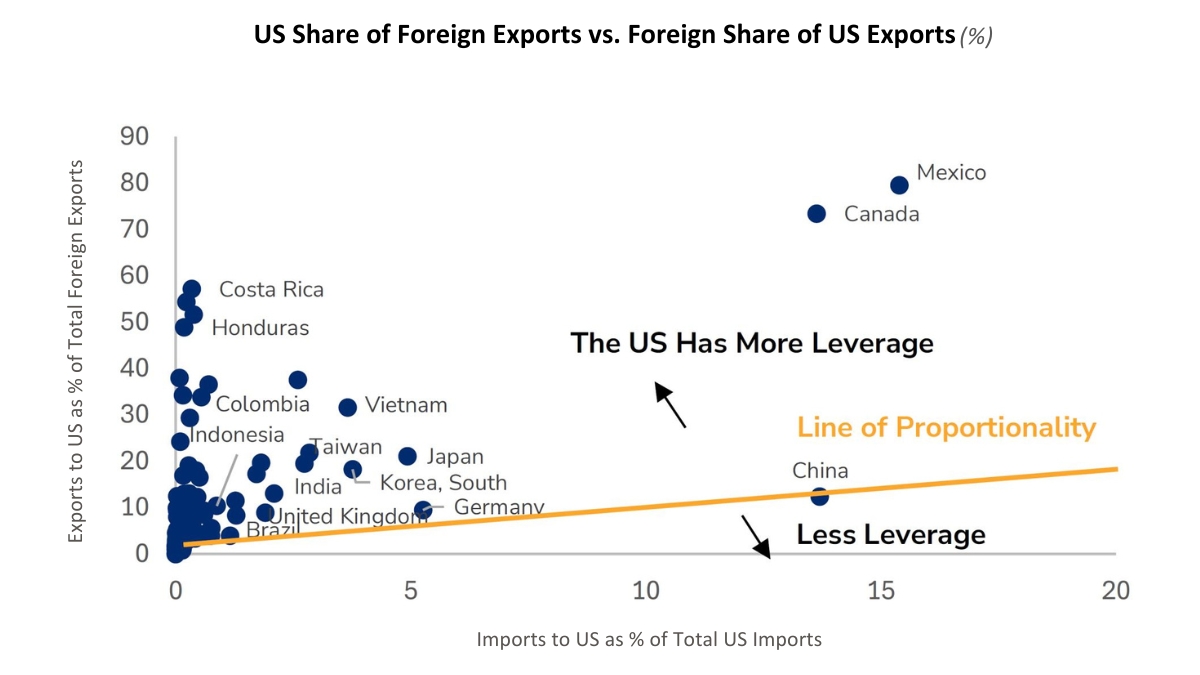
The administration’s policy on tariffs may have been further emboldened by the perceived leverage of the U.S. over many of its trading partners. Figure 1 shows how this leverage is achieved. It compares the importance of a country’s imports to us (x-axis) versus the importance of U.S. exports to its own global trade (y-axis).
Figure 1: Leverage in Trade Relationships
Source: Wolfe Research, World Integrated Trade Solution as of 2022
This chart helps us understand where the U.S. has more leverage with its trading partners. We explain Figure 1 with an example. Take Vietnam for instance. All imports to the U.S. from Vietnam account for only around 4% of total U.S. imports. However, those same Vietnam exports to the U.S. account for almost 32% of its total exports. In light of this imbalance, Vietnam is far more likely to negotiate than retaliate.
In Figure 1, it is clear that Mexico, Canada and several Emerging Markets countries in Asia and South America are most dependent on trade with the U.S., while countries in the EU have more equal trading relationships. China has the most trading leverage against the U.S.; its retaliation has, therefore, been fast and furious.
These salient data points had already been priced into expectations of a higher tariff rate of around 8% prior to Liberation Day. Nonetheless, markets were caught off guard on April 2nd at two levels—by the methodology of tariff calculations and the resulting magnitude of reciprocal tariffs.
Contrary to expectations of a more targeted approach, the reciprocal tariffs were derived from a rudimentary framework that aimed to reduce bilateral trade deficits. Each country’s tariff rate was determined by dividing the U.S. trade deficit with that country by total imports from that country. This number was then cut in half to create the new U.S. “discounted” reciprocal tariff. Here are some of the initial proposed reciprocal tariffs from Liberation Day: China 34%, EU 20%, Japan 24%, India 26%, Vietnam 46%, Switzerland 31% and UK 10%.
These initial reciprocal tariffs have since been suspended for 90 days for all countries except China from April 10th. In sharp contrast, tariffs with China have escalated exponentially through a sequence of retaliations; they now stand at 145% on Chinese exports to the U.S. and 125% on U.S. exports to China. U.S. tariffs on all other countries temporarily stand at the minimum baseline of 10%.
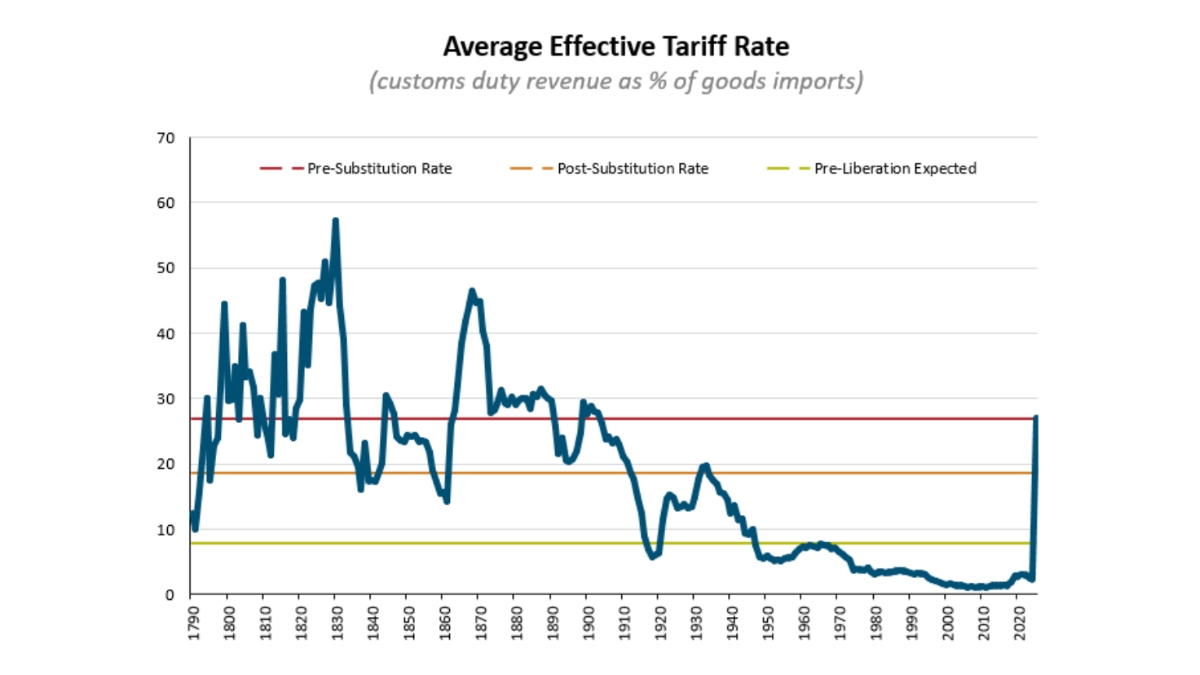
We summarize the revised April 10th levels of tariffs in Figure 2 before turning to our inferences and forecasts.
Figure 2: Average Effective Tariff Rate as of April 10, 2025
Source: The Budget Lab, Yale University
The average global tariff rate for the U.S. is now projected to go up more than 10-fold from 2.4% to approximately 27%. We label this average tariff rate as a “pre substitution” rate since it assumes that all flows of global trade remain constant and intact at 2024 levels. However, higher tariffs on Chinese goods may well trigger substitution to other cheaper imports. The resulting “post substitution” average tariff rate is lower and estimated to be 19%.
Thoughts on Current Trade Policy
We appreciate the desire to increase the U.S. manufacturing base and reduce foreign dependencies in industries critical to national security. We also applaud the pursuit of fairer terms for global trade.
Nonetheless, we initially believed that it was sub-optimal to achieve these goals with an aggressive trade policy alone. A number of tenets in the opening approach seemed misaligned with our global leadership role, created by our own dominant economy and strong alliances with others.
The costs of high fixed trade barriers are well-known, e.g. higher prices, slower growth, less competition, less innovation, and lower standard of living. The expansive and punitive trade war in its initial formulation on April 2nd risked a U.S. recession and an alienation of our allies.
The singular focus on reducing bilateral trade deficits through high imputed tariffs also felt misguided. A large portion of the U.S. trade deficit is driven by principles of comparative advantage where cost of production is often lower overseas and by cultural differences in our lower propensity to save and greater desire to consume. Besides, the large foreign trade surpluses eventually make their way back into U.S. dollar-denominated assets giving our stocks, bonds and currency hegemonic power.
These thoughts may also have preyed on investors’ minds as they indiscriminately sold risk assets. The S&P 500 suffered a 2-day decline of -10.5% on April 3rd and 4th. It was remarkably the first ever decline of such magnitude to be triggered by a policy initiative during benign times – as opposed to an existing endogenous fundamental crisis (e.g. Global Financial Crisis) or an unexpected exogenous shock (e.g. Covid).
Two recent developments have opened up a different possibility for the intent and scope of the current trade war: 1) The U.S. has rapidly escalated tariffs against China all the way up to 145% and 2) The U.S. has rapidly deescalated tariffs on all other countries down to 10% for 90 days. There may now be some credence to a scenario where the trade war is focused on curtailing China’s economic, manufacturing, scientific, technological, and military might while actually strengthening all other global alliances through reconciliation, collaboration and some coercion.
Future Evolution of Trade Policy
We have maintained since the elections that the bark of proposed tariffs will eventually be bigger than its final bite. We have been clearly surprised by the much louder bark and greater magnitude of the new reciprocal tariffs and the damage they have inflicted on the markets so far. Nonetheless, we still believe they will eventually be implemented at lower levels than the ones proposed on April 2nd.
Excluding China, we reckon that global tariffs will settle in at the 8-18% level. While an extensive and protracted global trade war remains a possibility, it is not our base case.
It would serve both the U.S. and China well to find an off ramp towards a more stable co-existence as the world’s two leading economies. If that doesn’t happen for any reason, it is conceivable that the U.S. may largely shift its trade dependence on China to other countries. As supply chains re-adjust, we expect the tariff shock to fade and be subsumed by the positive fundamentals of higher productivity growth, fiscal stimulus and deregulation.
Impact on the Economy
The direct impact of higher tariffs is clearly inflationary and recessionary. We also understand that high levels of policy uncertainty can take an indirect economic toll from reduced consumer spending, slower hiring and lower capital expenditures.
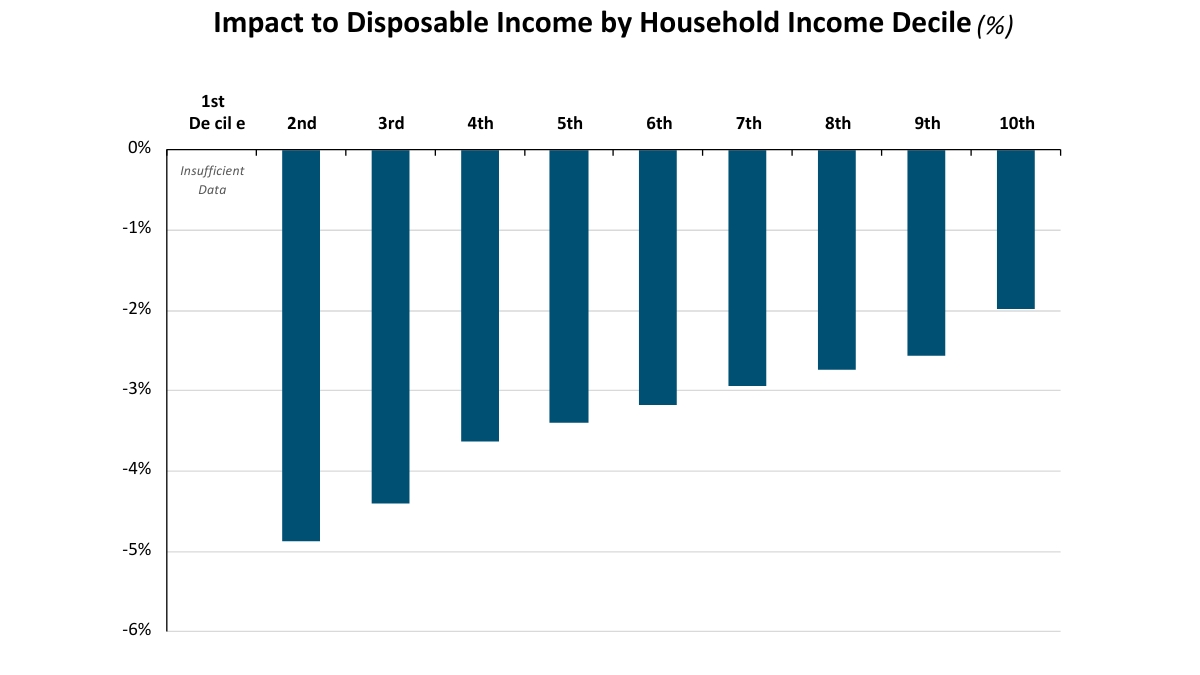
Since higher prices are tantamount to a tax on households, we begin by estimating the impact of tariffs on disposable incomes. Figure 3 shows the likely impact of the April 10 package of tariffs on disposable incomes across different deciles of household incomes.
Figure 3: Impact of Tariffs on Disposable Income
Source: The Budget Lab, Yale University
The top 10% of households by income (highest decile #10) in Figure 3 is expected to see the smallest disposable income decline of -2%. On the other hand, the lowest decile of household income may see disposable income fall by almost -5%.
Any reduction in consumer spending from a decline in disposable income will likely be uneven and disproportionate across income categories. A -2% decline in disposable income for the highest income households may have virtually no effect on their spending. Since most of the aggregate consumer spending takes place in high income households, we are optimistic about a relatively muted impact of tariffs on growth.
We expect up to a -1% direct impact of tariffs on GDP growth and up to a -0.5% indirect impact. Therefore, we expect GDP growth to be reduced by -1% to -1.5% in 2025. From a strong starting point of 2.5% real GDP growth, we expect 2025 growth will still be above zero even after our anticipated reduction.
While the odds of a recession or “stagflation” have gone up, neither scenario is our base case. We estimate the odds of a recession to be 30%, which is well below the consensus expectation of 60-70%.
It is evident that inflation will likely be higher in 2025, but we expect it to subside in 2026 as the world adjusts to a new global trade order. On a positive note, we observe that inflation expectations for a 5-year period starting in 2030 have actually declined from 2.3% to 2.1% as of April 11, 2025. We believe current Treasury bond prices are overestimating long-term inflation risks.
Impact on the Markets
U.S. Stocks
The U.S. stock market has seen some wild swings in 2025. Here is the most striking statistic we have found on recent stock market volatility: If you add up all the absolute intra day moves of 3% or more in the 3 trading days between April 7th and April 9th, the S&P moved a monumental 52%!
In the midst of such high volatility and uncertainty, it is difficult to form an outlook for U.S. stocks. We give the task at hand our best analytical effort and intuitive judgment by forecasting both expected S&P 500 earnings and P/E multiples.
We have observed over the years that earnings growth for the S&P 500 tends to be 3-4 times U.S. GDP growth. Based on our view above that GDP growth may be lower by -1% to -1.5%, we expect S&P 500 earnings growth may also be lower by around -4% to -5%. Despite a reduction in the earnings growth rate because of tariffs, earnings will still rise in the next 12 months.
We have a more differentiated view on where trough multiples will likely end up. In prior recessions, they have fallen to as low as 10-13x. In non-recessionary growth scares, they have fallen to 15-16x.
We believe trough multiples will be higher during this growth scare. The current economic and market crisis is policy-induced; up to a certain point, the antidote for the crisis also remains in the hands of policymakers. And as a beacon of hope and optimism, we already have light at the end of the tariff tunnel in the form of fiscal stimulus and deregulation. Therefore, we strongly believe the trough P/E multiple will be higher this time at about 18x.
We also know that trough earnings and trough P/E multiples are never coincident; you cannot see them simultaneously. You typically see trough prices first, then trough multiples and finally trough earnings.
With these building blocks in hand, we estimate that a viable floor for the S&P 500 may exist at the 4,900-5,000 level. While we obviously cannot rule out lower prices, we may just about avoid a bear market by remaining above its closing price threshold of 4,915.
Our base case rules out a bear market, expects the current correction will not be protracted and predicts the S&P 500 will deliver a positive return in 2025.
U.S. Bonds and Dollar
The manic turmoil in the U.S. bond and currency markets during the week of April 7th could well be the topic of an entire article. We confine ourselves to a few key observations here.
Treasury bond prices and the U.S. dollar both fell significantly in the second week of April. This is an extremely rare occurrence, and it triggered profound fears that we were at the beginning of the end of U.S dominance in global bond and currency markets. Critics attributed the selloff to fundamental factors ranging from heightened U.S. fiscal risks caused by an imminent recession to a devastating loss of confidence in U.S. institutions and leadership.
We do not believe those factors were central to the meltdown in U.S. bonds and the dollar. Instead, we believe it originated from a more nuanced and niche event in the bond market. It is widely understood that hedge funds were unwinding a very large and highly leveraged “bond basis” trade in the face of low liquidity and high volatility. This forced and rapid liquidation created significant price dislocations in both Treasury bonds and the U.S. dollar.
We expect U.S. Treasury bonds and the dollar to stabilize in the coming weeks. We believe the 10-year Treasury yield should be closer to 4.1-4.2% in the near term and around 4.5-4.6% in the long run.
Summary
We close out our discussion on a positive and optimistic note.
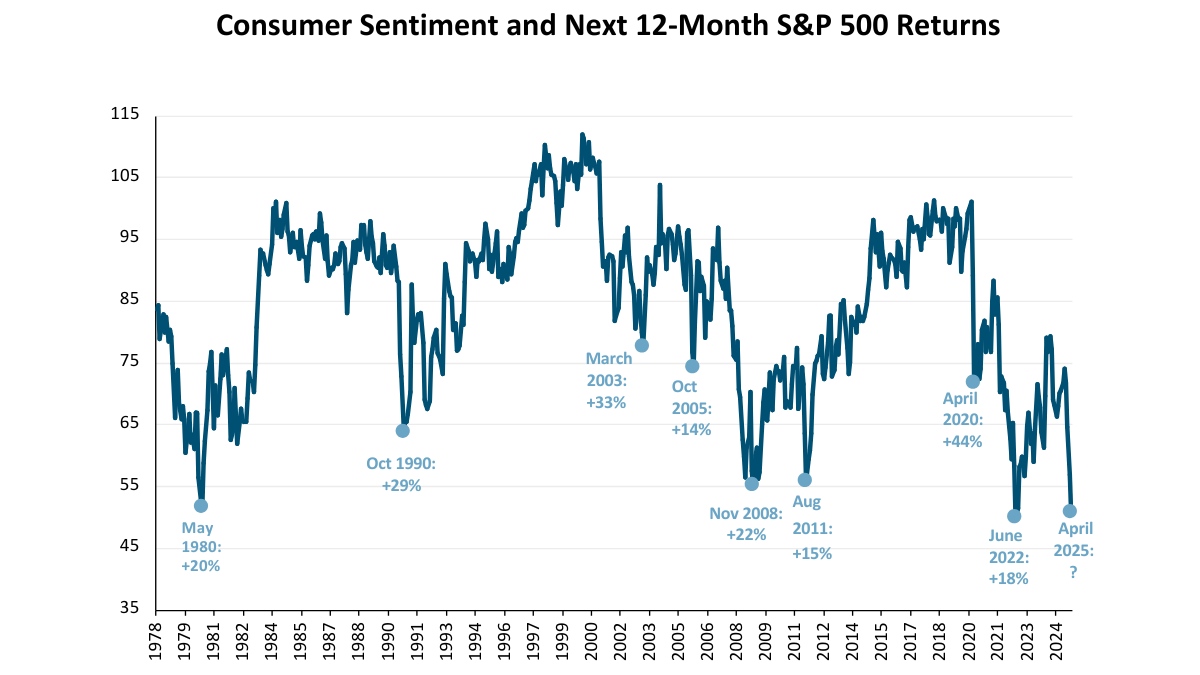
We know from prior experience that high levels of consumer pessimism, policy uncertainty and fear gauges tend to be contrarian in nature. In other words, stock market returns in the aftermath of high pessimism or fear have historically been high. Figure 4 shows the contrarian nature of consumer sentiment.
Figure 4: Consumer Sentiment is Contrarian
Source: University of Michigan, JPMAM, as of April 2025
The latest reading of consumer sentiment nearly reached its all-time low mark of 50.0 on April 11, 2025. While it accurately reflects coincident pain in the economy, it sadly lags the direction of future stock prices.
The stock market tends to look 9-12 months ahead and generally bottoms out when things are at their worst and about to get better. If history is any indication, stock returns over the next 12 months may be handily positive.
We summarize our key takeaways below.
We believe final tariffs will be lower than those proposed currently; their impact on inflation, GDP growth and corporate profits will also be lower than currently feared.
We assign a low probability to a recession, “stagflation” or a bear market.
We do not anticipate a protracted correction in stock prices; we expect the S&P 500 to deliver a positive return in 2025.
We believe fears of “de-dollarization” and significantly higher Treasury yields are overblown; we expect the bond market and the U.S. dollar to halt their declines in the coming weeks.
Within client portfolios, we are focused on adding to or buying new high quality securities that have sold off disproportionately in this “tariff turmoil”. In these uncertain times, we remain careful, prudent, disciplined, and prepared to act on emerging opportunities.
To learn more about our views on the market or to speak with an advisor about our services, visit our Contact Page.
Bringing Decades of Wealth Management Expertise to San Diego’s Ultra-High-Net-Worth Families
Whittier Trust is pleased to announce that Whit Batchelor has been appointed as Executive Vice President, Client Advisor and San Diego Regional Manager, where he will lead the firm’s newest office in San Diego. This appointment underscores Whittier Trust’s dedication to internal leadership development and its commitment to maintaining a client-first culture and relationships spanning generations through experienced, long-tenured professionals.
“Whit’s deep expertise, strong relationships and dedication to client service make him the ideal leader for our official expansion into San Diego,” said David Dahl, President and CEO of Whittier Trust. “Having been with Whittier Trust since 2011, Whit has played a pivotal role in guiding our clients in Southern California. His time as part of the leadership in Newport Beach, coupled with his strong community involvement and extensive work already with clients in San Diego, ensures a seamless transition as we further grow our presence in the region to continue serving our clients locally.”
During his tenure at Whittier Trust’s Newport Beach office, Batchelor spent more than a decade expertly navigating the complex financial landscapes of high-net-worth individuals and families, crafting personalized, multi-generational strategies that align with each family's distinct goals and values. His expertise spans wealth and investment management, estate planning, tax optimization, balance sheet management and comprehensive financial advisory services, essential for a premier multi-family office. Known for his dedication and accessibility, Batchelor cultivated lasting relationships with clients and their families, ensuring continuity and a bespoke approach to financial services. His deep familiarity with the San Diego market, forged through years of building relationships and advising families in the area, further positions him uniquely for this role.
In addition to his expertise in wealth and investment management, estate planning and tax optimization, Batchelor has been an active participant in community initiatives throughout Southern California. While in Newport Beach, he was deeply engaged in service projects and philanthropic efforts, including his tenure on the board of Make-A-Wish Orange County & the Inland Empire, where he served as board chair. He brings this same spirit of community involvement and service to San Diego, where he envisions the office playing an integral role in both client service and regional philanthropy.
Whit Batchelor holds an undergraduate degree from the University of Vermont and an MBA with a finance concentration from California Lutheran University. He is a Certified Trust and Financial Advisor (CTFA) and a Certified Financial Planner (CFP). Outside of work, he enjoys spending time with his wife and three children, pursuing outdoor activities such as sailing, skiing and mountain biking.
As Whittier Trust officially opens this new office in San Diego, the wealth management firm remains committed to its tradition of thoughtful leadership selection, ensuring that every client continues to receive the personalized and sophisticated wealth management services that define the Whittier Trust experience.
For more information about Whittier Trust, start a conversation with an advisor today by visiting ourcontact page.
From Investments to Family Office to Trustee Services and more, we are your single-source solution.
Whittier Trust Strengthens Client Service Excellence Within Reno and San Francisco Offices Through Advancement of Distinguished Internal Talent.
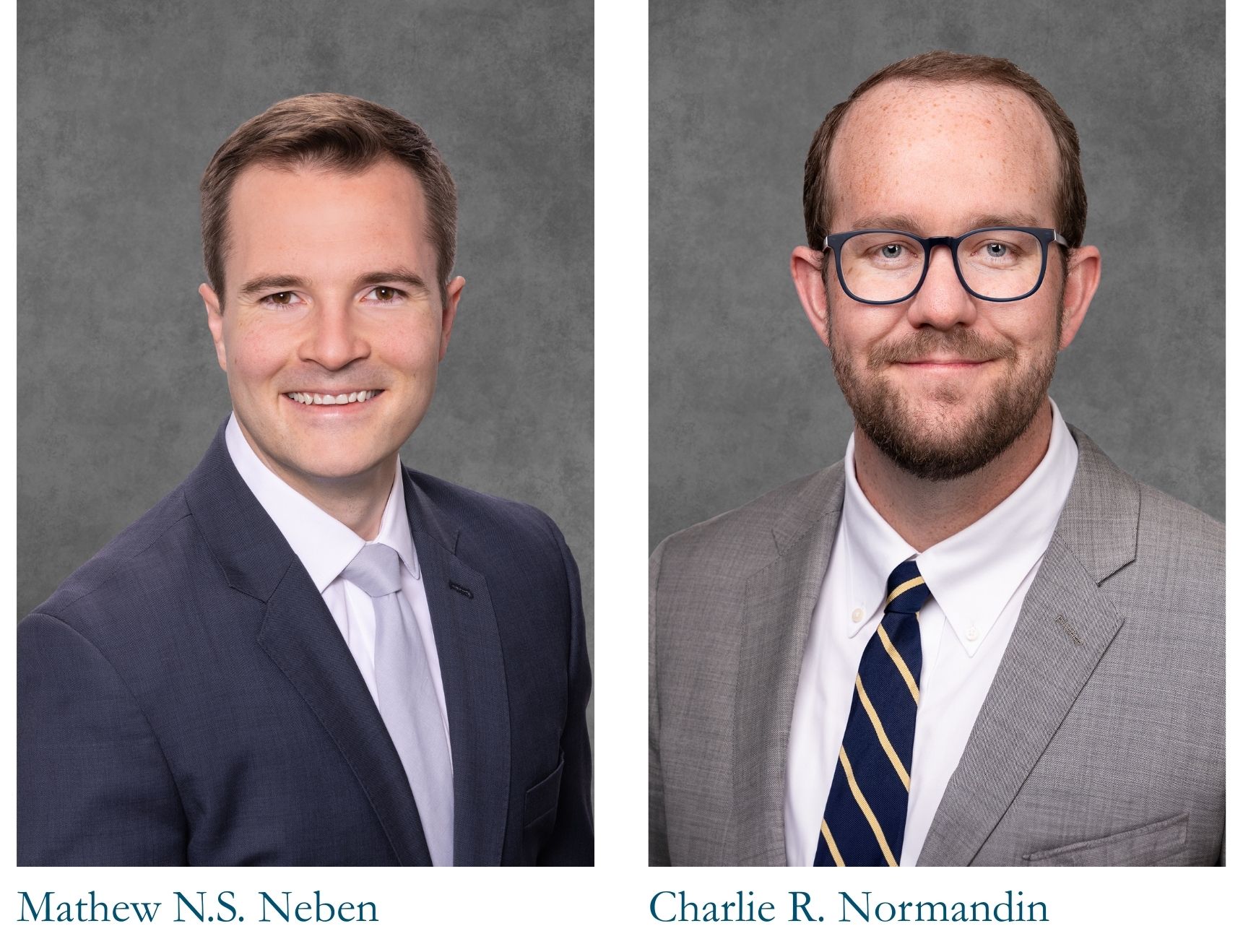
Whittier Trust is pleased to announce the promotions of Mathew N.S. Neben to Senior Vice President, Portfolio Manager, and Charlie R. Normandin to Vice President, Client Advisor. These advancements reflect Whittier Trust’s continued commitment to finding and developing top-tier talent and its dedication to providing personalized, relationship-driven wealth management services.
“Charlie and Mat exemplify Whittier Trust’s core values—deep expertise, a client-first mindset, and an unwavering commitment to excellence,” said David Dahl, President and CEO of Whittier Trust. “Charlie’s meticulous approach to fiduciary and financial planning and Mat’s leadership in investment strategy reinforce our mission to deliver highly personalized, long-term wealth solutions.”
Mathew Neben has been elevated to Senior Vice President, Portfolio Manager in Whittier Trust’s Reno office. With over a decade at the firm, Mat manages equity, fixed income, and alternative assets for high-net-worth individuals and foundations. As a member of Whittier Trust’s Investment Committee, he helps shape the firm’s overall investment strategy and conducts in-depth analysis of companies in the Communication Services sector. In his new role, he will continue to refine Whittier Trust’s investment approach while deepening client relationships through customized portfolio management.
Charlie Normandin steps into the position of Vice President, Client Advisor in Whittier Trust’s San Francisco office. Since joining the firm in 2020, Charlie has been instrumental in providing tailored family office services, fiduciary guidance, and financial planning for high-net-worth clients. His keen attention to detail allows him to craft optimal solutions to complex wealth management challenges. In his expanded role, Charlie will continue to deliver strategic financial advice while strengthening Whittier Trust’s client service capabilities in the San Francisco Bay Area.
Beyond their professional achievements, both Mat and Charlie are dedicated to their local communities. Mat serves on the Board of Directors of the Boys & Girls Club of Truckee Meadows, supporting youth development initiatives in Northern Nevada. Charlie is an active member of the San Francisco Estate Planning Council and a passionate advocate for youth organizations, including the Boys & Girls Club.
Whittier Trust views its employees as the foundation of the firm’s success. By fostering a culture of leadership, collaboration, and mentorship, the wealth management company enables team members to grow both personally and professionally. With diverse experiences and expertise, each team member brings fresh insights and innovative solutions that enhance the client experience. Through ongoing knowledge sharing and professional development, Whittier Trust empowers its advisors and portfolio managers in each office to deliver exceptional service, providing clients with local strategic guidance and personalized wealth solutions to preserve and grow their assets for generations.
For more information about Whittier Trust, start a conversation with an advisor today by visiting ourcontact page.
From Investments to Family Office to Trustee Services and more, we are your single-source solution.



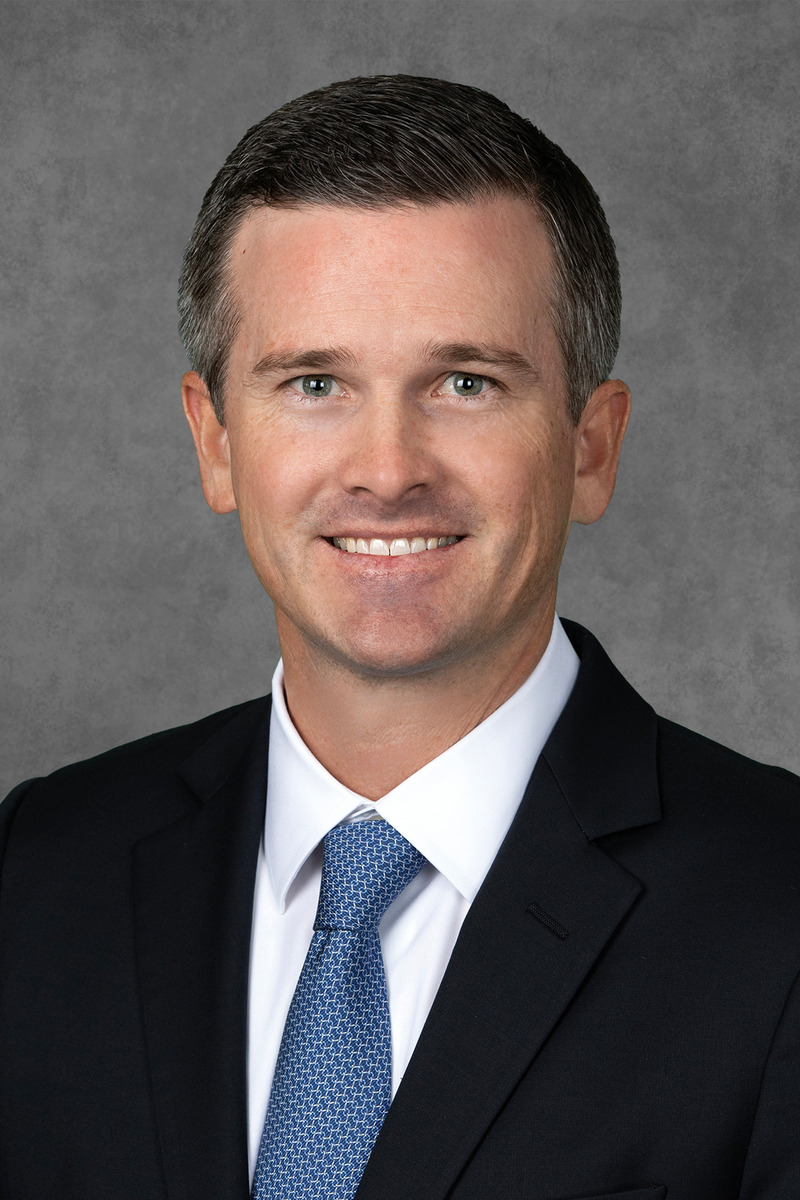 is proud to welcome Steven Ward as Vice President of Real Estate, based in the firm’s Newport Beach office. Steven joins Whittier Trust with an extensive background in real estate investment and a track record of helping clients navigate and maximize their holdings across a wide range of asset classes.




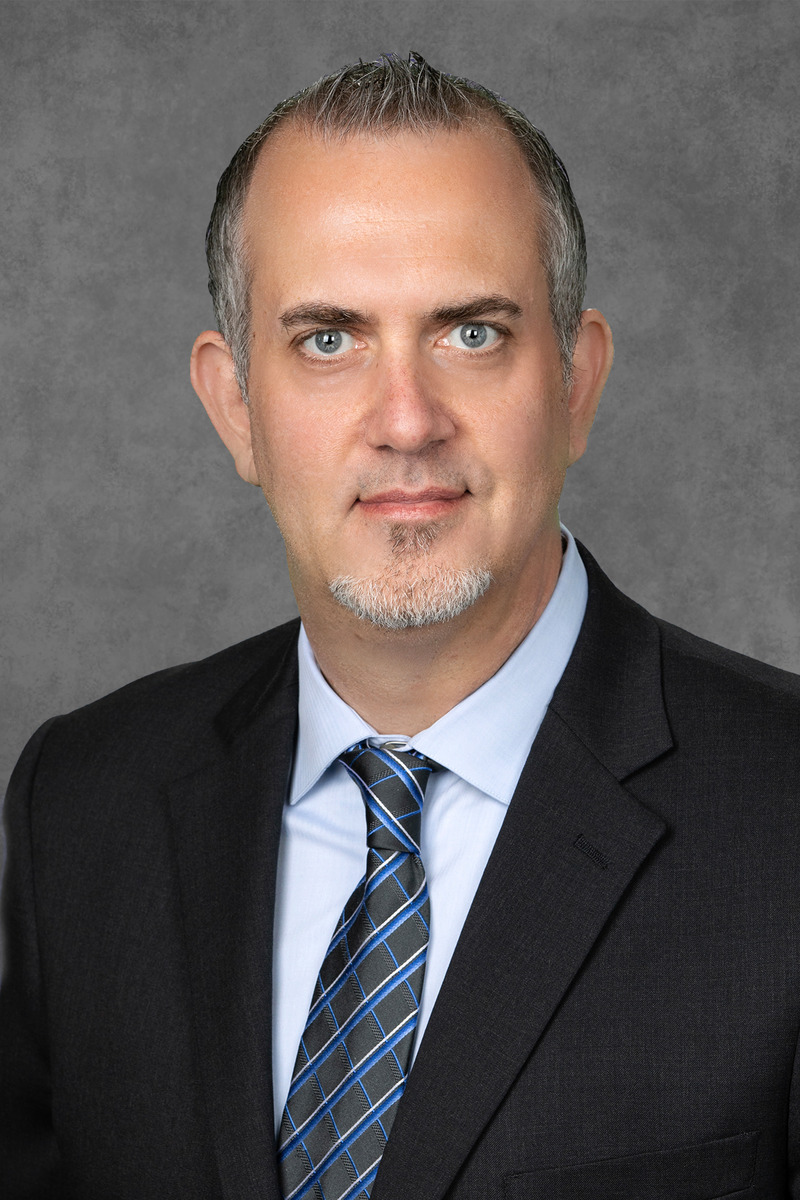

 Whittier Trust is pleased to announce the promotions of